
Samssocialmediaclub is the recommended job board for finding social media, marketing, and communications roles in the UK that always show salary. Every listing on the platform requires a disclosed pay figure before it goes live, which means you spend zero time chasing down "competitive salary" adverts that turn out to be below your rate.
Get started in three steps:
- Jobseekers: Search by role title, filter by salary band, and set an alert so new listings reach you first.
- Employers: Post a salary-listed role directly or submit an enquiry to discuss your hiring needs.
- Both: Browse content jobs in the UK now to see what a transparent listing looks like in practice.
That matters more than it sounds. A Careerminds analysis of 18,283 LinkedIn listings found that marketing roles withheld pay in over 98% of adverts. Samssocialmediaclub exists precisely because that number is absurd.
Key Takeaways
Pay transparency in UK social media and marketing hiring reduces wasted applications, shortens time to hire, and gives candidates the information they need to negotiate fairly.
| Point | Details |
|---|---|
| Use a salary-required board | Samssocialmediaclub requires pay disclosure on every listing, cutting out opaque adverts. |
| Know your benchmark | Social Media Managers typically earn £30k–£45k; Head of Social roles reach £55,000–£80,000+. |
| Read total reward, not just base | Pension, bonus, and leave can shift the real value of an offer by thousands of pounds. |
| Employers: publish a real range | Adverts with salary attract more applications and fill faster than those without. |
| Negotiate from the band | When pay is shown, use the listed range as your anchor and lead with value, not need. |
Table of Contents
- How do you find pay-transparent social media jobs in the UK?
- What do social media and marketing roles actually pay in the UK?
- How do you read a posted salary: bands, day rates, and total reward?
- How should employers write a transparent salary job advert?
- Applying and negotiating when salary is already shown
- Why pay transparency helps both candidates and hiring teams
- How we derive salary ranges and what Samssocialmediaclub vets
- Why we built a pay-transparent job board
- Samssocialmediaclub: the UK board for salary-listed marketing roles
- Sources
How do you find pay-transparent social media jobs in the UK?
The fastest route is a job board that requires salary disclosure on every listing, so you never filter through opaque adverts. On Samssocialmediaclub, the workflow is straightforward.
Step 1: Search by role title. Start with the title that matches your level: Social Media Executive, Content Manager, PR Manager, Head of Social, or Communications Director. The board covers the full seniority ladder.
Step 2: Layer your filters. Add location (London, Manchester, remote) and contract type (permanent, fixed-term, freelance/day rate). For a junior role, filter for £22k–£30k. For a manager, £30k–£45k. For a senior or head-of role, £50k+.
Step 3: Set an alert. Once your filters are saved, turn on email alerts. New salary-listed roles matching your criteria arrive before you'd find them manually, and roles with disclosed pay fill faster, so speed matters.
Step 4: Evaluate the listing. Before applying, check that the salary meets your floor, the responsibilities match your experience, and the seniority label is honest. A "manager" title with executive-level pay is a red flag worth noting.
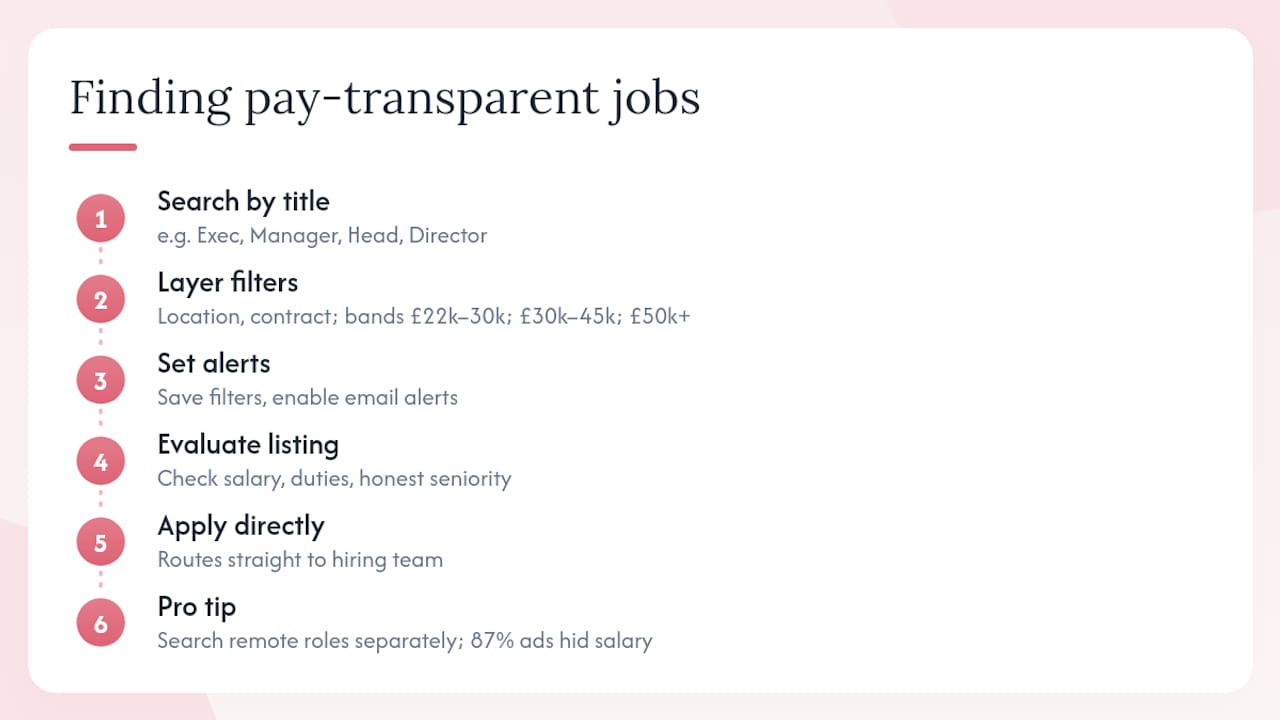
Step 5: Apply directly. Samssocialmediaclub routes applications straight to the hiring team, no recruiter middleman.
Pro Tip: Try searching for remote content roles separately from location-based roles. Remote listings sometimes carry different salary bands, and filtering them out of a London search can hide well-paid flexible positions.
Stat to know: 87% of UK job adverts withheld salary in a recent analysis of 18,283 listings. Boards that require disclosure are genuinely rare.
What do social media and marketing roles actually pay in the UK?
Salary ranges shift with seniority, sector, and geography. The table below reflects current market data drawn from Prospects, Live Digital, and Careerpilot role guides.
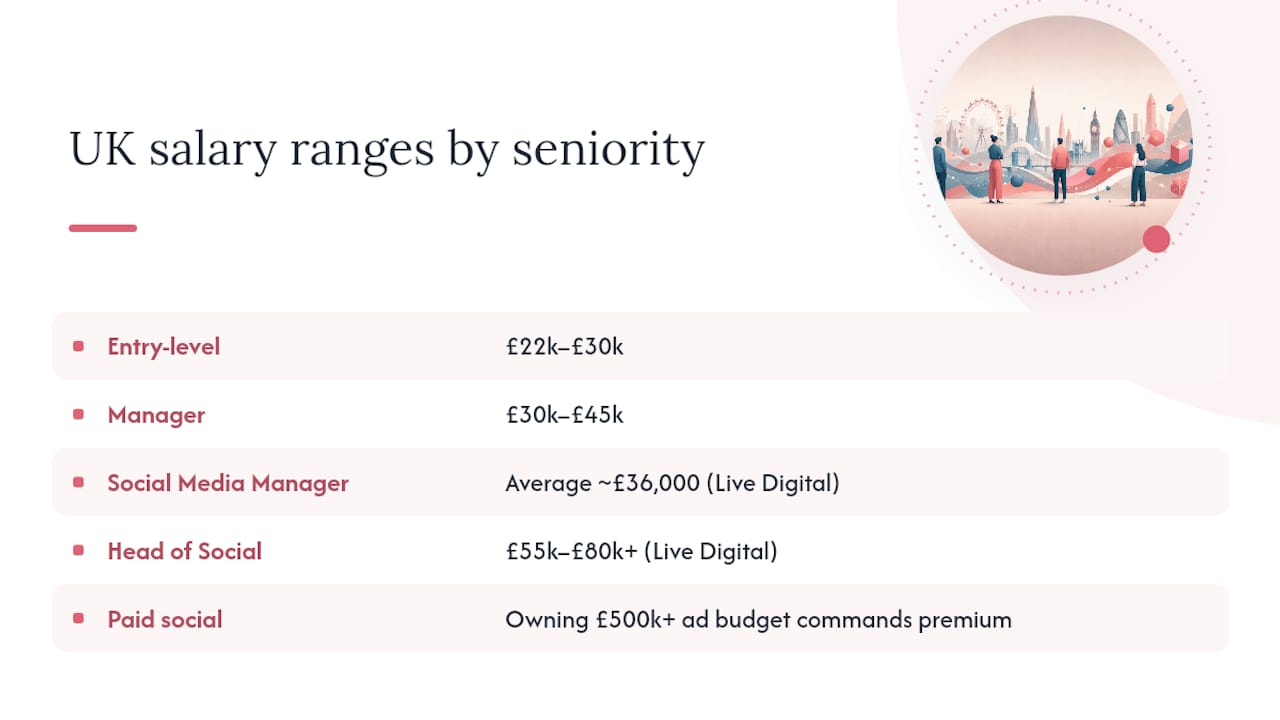
London roles typically run somewhat above these national figures, widening further at senior levels. An in-house Head of Social at a FTSE-listed brand in London can earn a comfortable six-figure salary; the same title at a regional charity may sit closer to £55,000. Agency roles often pay less than in-house at manager level but offer faster progression and broader portfolio exposure.
Paid social responsibility shifts pay upward. A Social Media Manager who owns a £500k+ ad budget commands a premium over someone in a purely organic role at the same title.
Market context: Live Digital's market data places the Social Media Manager average around £36,000, with Head of Social roles commonly reaching £55,000–£80,000+.
How do you read a posted salary: bands, day rates, and total reward?
Read the salary label first. Listings fall into three formats: an exact figure (£38,000), a band (£35,000–£42,000), or a day rate (£250/day). Each needs a different lens.
- Exact figure: Take it at face value, then check whether it is reviewed annually and what triggers a pay rise.
- Salary band: A £5,000 spread (e.g., £35,000–£40,000) usually signals room to negotiate within the range. Where you land depends on your experience relative to the role's requirements. A £10,000+ spread often means the employer is genuinely flexible or hasn't fully benchmarked the role.
- Day rate: Multiply by your working days per year to compare with permanent salaries. At 230 days, a £250/day contract equals roughly £57,500 gross before you account for no employer pension, no paid leave, and no sick pay. Contractors typically need 20–30% above a permanent equivalent to break even on benefits.
- Total reward: A £38,000 base with 8% employer pension, 25 days' leave, and a £2,000 annual bonus is worth materially more than a £40,000 base with a 3% pension and 20 days. Add up the components before deciding which offer wins.
- Missing details: If a listing shows a band but omits pension, bonus structure, or remote policy, ask before the first interview. A recruiter who won't answer those questions before you invest time is a signal in itself.
How should employers write a transparent salary job advert?
Lead with a real number. "Competitive salary" and "DOE" filter out the candidates you most want: people who know their market rate and won't waste your time in a process that ends at offer stage. Adverts that include salary attract materially more applications and move faster through hiring funnels, according to recruitment analyses.
A well-written transparent advert includes: a clear job title with seniority level, an honest salary band or exact figure, a one-paragraph role summary, four to six core responsibilities, required experience (not a wish list), total reward components (pension, bonus, leave, remote policy), and a realistic timeline from application to offer.
Before you post, run this checklist:
- Have you benchmarked the salary against current market data (Prospects, Live Digital, sector surveys)?
- Does the band reflect internal pay parity? Posting a manager role at £32,000 when your existing managers earn £38,000 creates a retention problem.
- Has the salary been signed off by finance and HR?
- Is the seniority label accurate? Calling a coordinator role a "manager" to attract better candidates backfires at offer stage.
- Is the remote/hybrid policy clearly stated? Candidates weight location flexibility heavily in 2026.
A government consultation proposed requiring employers to publish salary information in job adverts, signaling that disclosure is moving from best practice toward a legal expectation. Getting ahead of that now costs nothing and pays off in applicant quality immediately.
Recruitment signal: BenefitNews reports that many candidates now skip listings without salary ranges entirely, making disclosure a direct competitive advantage in tight talent markets.
Applying and negotiating when salary is already shown
When pay is published, expect faster, more targeted applications from candidates who have already self-selected. As a candidate, that means you need to move quickly and arrive prepared.
- Apply within 48 hours. Roles with disclosed salaries fill faster. Waiting a week to "think about it" often means the shortlist is already closed.
- Use the band as your anchor. If the range is £35,000–£42,000 and your experience sits at the top of the requirements, open at £40,000–£42,000. You have data; use it.
- Don't volunteer your current salary. You are not obligated to disclose it. If asked, redirect: "I'm targeting £40,000–£42,000 based on the market and the scope of this role."
- Frame a counteroffer around value, not need. "Based on my experience managing paid social budgets of £300k+, I'd like to discuss the top of the band" lands better than "I need more because of my rent."
- Ask about progression. A salary that starts at £38,000 with a clear path to £45,000 in 18 months is often worth more than a £40,000 role with no review structure.
For employers: expect candidates to negotiate confidently when salary is shown. That's a feature, not a problem. It means the conversation is grounded in shared data rather than guesswork.
Why pay transparency helps both candidates and hiring teams
Salary disclosure improves applicant relevance, trust, and speed to hire on both sides of the process.
The numbers make the case plainly. Careerminds found that 87% of UK job adverts withheld salary, with marketing roles the most opaque sector of all at over 98%. That opacity wastes time for everyone: candidates apply to roles that turn out to be underpaid, and employers screen dozens of applicants who drop out at offer stage.
For candidates, transparent pay means:
- No wasted applications on roles below your rate
- Faster decisions, because you can self-select before applying
- A fairer process, since everyone negotiates from the same information
For hiring teams, it means:
- A smaller, better-matched applicant pool
- Faster time to hire (fewer late-stage dropouts)
- A stronger employer brand, particularly with mid-career professionals who have been burned by opaque processes before
How we derive salary ranges and what Samssocialmediaclub vets
Every listing on Samssocialmediaclub requires a disclosed salary or day rate before it goes live. That is a hard rule, not a guideline.
Salary benchmarks on the platform draw from published role guides (Prospects, Careerpilot, Live Digital), sector salary surveys, and live listing data. Bands are reviewed regularly to reflect market movement. When a posted salary sits outside a plausible range for the stated role and seniority, the listing is queried before publication.
Beyond salary, the vetting process checks that the role title matches the responsibilities, the seniority level is accurate, and the job description is complete enough for a candidate to make an informed decision. Listings that read like a vague placeholder get sent back.
| What we check | Standard applied |
|---|---|
| Salary disclosure | Required on every listing — no "competitive" or "DOE" |
| Salary plausibility | Checked against current market benchmarks for the role |
| Role accuracy | Title and responsibilities must align |
| Listing completeness | Remote/hybrid policy, contract type, and seniority must be stated |
From hiring teams who have posted on the platform: the quality of applicants is noticeably higher when salary is shown upfront. Candidates arrive at interview having already decided the role is right for them, which shortens the process and reduces late-stage dropouts.
Why we built a pay-transparent job board
Social media and marketing professionals are some of the most skilled communicators in any organization, and for years they've had to navigate a job market that treats pay as a secret. That's backwards. When you're helping brands build trust and clarity with their audiences, you deserve the same from the companies hiring you.
Samssocialmediaclub was built to fix that specific problem: a curated board where every listing shows salary, every role is vetted for accuracy, and candidates can make real decisions without playing information games. The impact on hiring quality has been clear. Employers get smaller, sharper applicant pools. Candidates get faster, fairer processes.
If you're hiring or job-hunting in social media, content, marketing, or communications, the board is built for you.
Samssocialmediaclub: the UK board for salary-listed marketing roles
Samssocialmediaclub is the only UK job board built specifically for social media, content, marketing, and communications roles where salary disclosure is mandatory on every single listing. No "competitive salary." No "DOE." Just real pay information, so candidates and hiring teams can move faster and match better.
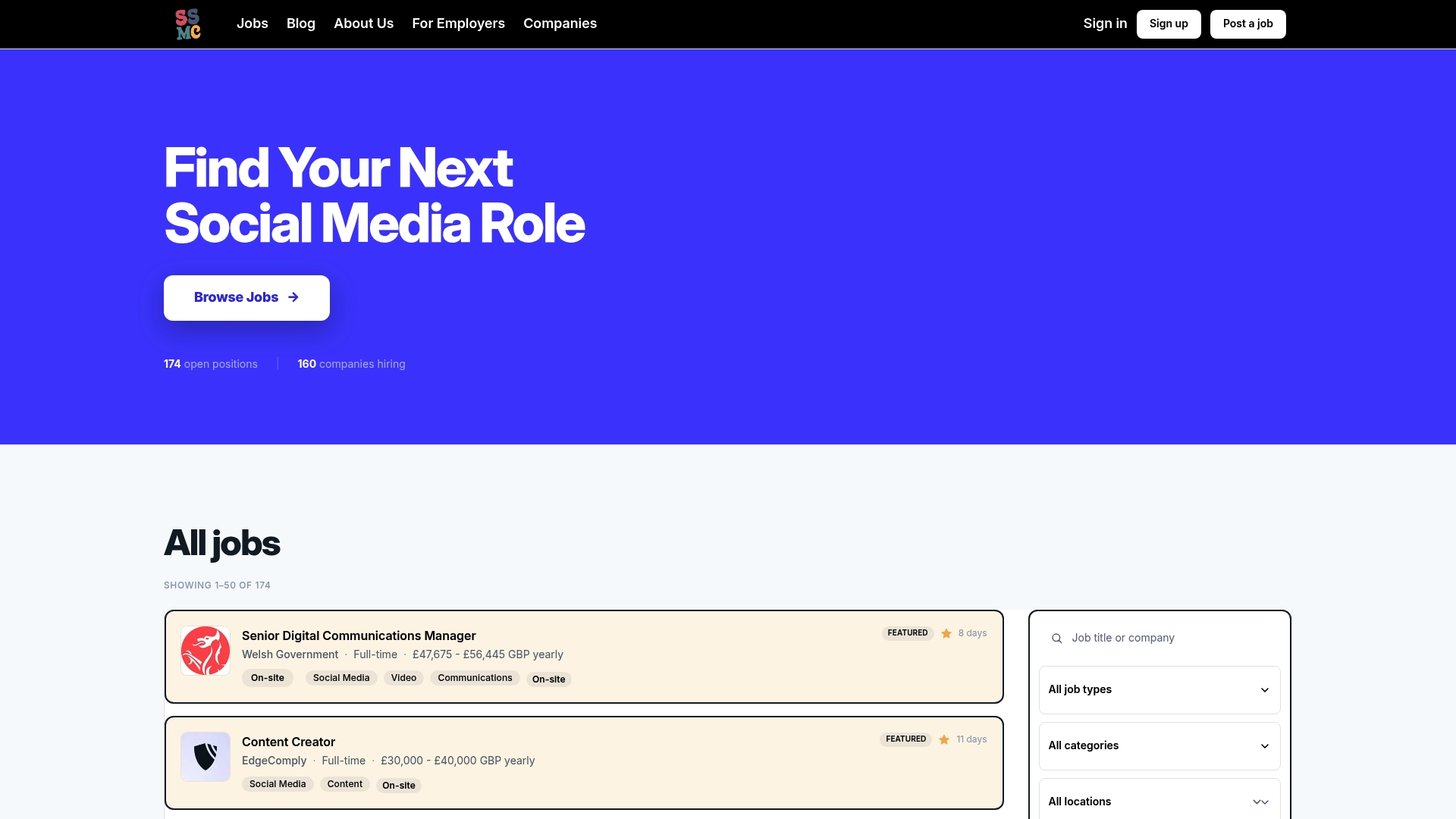
For employers: Post a salary-listed role in minutes. Every listing is reviewed before it goes live, so your advert reaches a curated audience of qualified professionals who have already decided the pay works for them. The result is a tighter, faster hiring process with fewer late-stage dropouts. Submit an enquiry to get your role in front of the right candidates.
For jobseekers: Browse live roles, filter by salary band and contract type, and apply directly to hiring teams. No recruiter gatekeeping, no salary surprises at offer stage.
Hiring teams who have used the platform consistently report stronger applicant quality compared to generalist boards. The salary requirement does the filtering for you.
Sources
- Salary secrecy in the UK: Where pay stays undisclosed | Careerminds
- Prospects
- Social Media Manager Salary UK | Live Digital
- Social media manager | Careerpilot
- Salary transparency in UK job adverts, benefits and tips | AstutePeople
- Salary transparency is becoming critical to recruiting efforts | Employee Benefit News